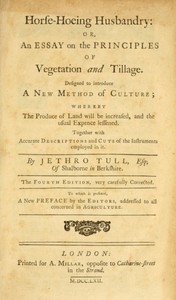
"Horse-hoeing Husbandry" by Jethro Tull is an insightful treatise that revolutionizes agricultural practices in the early 18th century. Focusing on the principles of vegetation and tillage, Tull advocates for a new method of cultivation that promises to increase crop yields while reducing costs. This work not only serves as a guide for farmers but also illustrates a significant shift towards scientific farming methods during an era of burgeoning agricultural innovation.
The Story
Tull presents a systematic approach to farming that emphasizes the importance of soil health and the efficient use of tools, particularly his innovative horse-hoeing machine. He meticulously details the techniques and instruments that contribute to more productive land management. While the narrative centers on agricultural methods, it subtly critiques traditional practices and urges a move towards evidence-based farming.
The themes of innovation and practicality are prevalent throughout the text, reflecting Tull's commitment to improving the lives of farmers. His tone is instructional yet persuasive, aiming to educate his audience on the benefits of adopting modern techniques to achieve better agricultural results.
Why You Should Read It
- Innovative Agricultural Principles: Tull introduces groundbreaking concepts that laid the foundation for modern farming techniques.
- Historical Context: The book provides a snapshot of the agricultural revolution, highlighting the shift towards more scientific methods of cultivation.
- Detailed Illustrations: The accompanying diagrams enhance understanding of the tools and techniques discussed, making the text accessible to a wider audience.
- Practical Applications: Farmers and agriculturalists will find valuable strategies that can be applied to contemporary practices.
- Intellectual Rigor: Tull's analytical approach encourages readers to engage critically with the material and consider the implications of agricultural practices on society.



Leave a Comment